Articles
Share post:

At every big match, some of your tickets change hands. A season ticket holder gets sick, a fan gets stuck at work, another bought four tickets planning to resell three. According to figures cited in the French National Assembly (Assemblée nationale), illegal resale accounts for 10 to 15% of tickets, and up to 25% for some events.
So ticket resale is already happening, whether you organize it or not. The real question is where it happens: on your ticketing platform, or on social media and websites you don't control.
When it happens elsewhere, the club loses on every front. It earns nothing on the resale, it no longer knows who's sitting in its stands, and its fans are exposed to scams. The day one of them is turned away at the gate with a fake ticket, they don't blame the fake seller. They blame the club.
In this guide, we walk through the most common ticket scams, what the law says, the rules to set for an effective official resale, and concrete steps to protect your attendees.
Key takeaways
Ticket resale is best kept under control when it goes through an official resale platform, directly on the organizer's ticketing platform. The ticket is verified, and the club sets the rules. It's the best protection against scams and scalping, on one condition: the club itself must define clear rules on prices, deadlines and the number of resales.
Ticket scams: the 4 most common
Every scam has one thing in common: it takes advantage of moments when demand outstrips supply. Scams multiply ahead of derbies, sold-out matches and playoffs, when fans will do anything to get a seat.
Fake and duplicated tickets
A PDF ticket or a screenshot of a QR code can be copied endlessly. The same ticket gets sold to five different people: the first one to reach the stadium gets in, the other four are turned away at the turnstile.
What the fan goes through: they discover the scam at the stadium entrance, at the worst possible moment, with no recourse.
What the club loses: angry fans at the turnstiles, overwhelmed front-of-house staff, and lines that slow down entry for everyone.
Fake ticketing websites
Some sites copy the club's logo, colors and name, and sometimes even rank at the top of search results thanks to paid ads. The fan thinks they're on the official ticketing platform.
What the fan goes through: they pay, sometimes receive a fake ticket, and often get nothing at all.
What the club loses: complaints about sales it never made, and damaged trust in its real ticketing platform.
Ticket scams on social media
This is the most widespread scam. The fake seller replies fast, sounds reassuring, promises a transfer through the official app and sometimes sends fake screenshots of the transfer to look credible. Swiss police regularly warn about this scenario, which leaves victims with no ticket and no refund.
What the fan goes through: they pay by bank transfer or a friends-and-family payment, and the seller vanishes.
What the club loses: a seat that will stay empty, when a real fan could have filled it.
Scalping and inflated resale prices
Scalping means buying tickets in bulk as soon as sales open, often with automated bots, to resell them for far more than their face value. Here, the ticket is often genuine: the price is the problem.
What the fan goes through: they pay two, three or ten times face value for their seat, or can't find one at all.
What the club loses: the price difference goes to a reseller, and seats go to whoever pays the most, not to the fans who create the atmosphere in the stadium.
Is ticket resale legal?
Yes, in most cases. A fan who can no longer attend can resell their ticket now and then, no problem.
What French law prohibits is reselling tickets on a regular basis without the organizer's consent. It targets resellers who buy tickets in bulk to resell them at a higher price, as the DGCCRF (France's consumer protection authority) points out.
For a club, that's good news: the law puts it in control. The club decides whether its tickets can be resold, where, and on what terms.
That still leaves the question of trust. Outside the official ticketing platform, neither the seller nor the buyer has any guarantee that the ticket is valid. That's the whole point of resale organized by the club.
Why offer an official resale platform?
Banning resale doesn't work: a fan who can't make it will always want to pass on their seat. Without an official option, they'll turn to social media, with all the risks that come with it. You don't fight scalping by ignoring resale, but by organizing it yourself.
The big clubs have figured this out. Paris Saint-Germain created its official resale platform, Ticketplace, originally to fight the black market and the circulation of fake tickets. According to the club, more than 150,000 tickets were exchanged on it in a single season. In Germany, FC Schalke 04 recorded more than 4,000 resales within a few hours of launching its own platform, resulting in fewer empty seats, fewer fraud-related requests and a better atmosphere on match days.
For the club, the benefits are concrete:
protected fans: the ticket is verified, the old one is canceled, and the new one is valid;
filled seats: a released seat finds a new spectator instead of staying empty;
new contacts: the new buyer goes through the club's ticketing platform, so the club now knows who they are;
one less barrier to buying: fans are more willing to buy in advance if they know they can resell their seat if something comes up.
Season ticket holders are the best example. A season ticket holder who misses a winter match means an empty seat, a slow concession stand and a quieter stand. With resale, their seat finds another fan. We cover this point in the season in detail in our article on the ticketing season calendar.
You still need to set rules, though. On Ticketplace, resale prices are set by the fans, with no involvement from the club. For the Champions League semifinal against Arsenal, some seats resold for as much as €7,900. The official platform got rid of fake tickets, but scalping stuck around. Official resale only truly protects fans if the club sets the rules.
Want to set up official resale with your own rules? Talk to the Tickie team.
Official resale: which rules should you set?
Effective official resale relies on a few simple rules, defined before you open it up.
Price
Set a maximum price: face value, or a small markup. Without a cap, official resale can turn into a playground for scalpers. Keep the law in mind too: in France, when an event is subsidized by the government or a local authority, a ticket can't be resold for more than its listed price.
Who can resell
All buyers, or season ticket holders only? Some clubs reserve resale for their season ticket holders, to free up the seats of those who can't make it.
How many times
Limit the number of resales per season, so a season ticket doesn't become a source of income. At PSG, the Virage package allows up to 10 resales and 10 loans per season.
Until when
Set a deadline before the match, so the new buyer has time to receive their ticket.
Fees
Decide who pays the resale fees, the seller or the buyer, and whether a share goes to the club.
Ticket transfer vs. resale: what's the difference?
Transfer lets a fan give their seat to a friend or family member, with no money changing hands. The ticket simply changes names.
Resale lets a fan sell their seat to another fan, at a price capped by the club.
The two meet different needs. A fan who can't make it often wants to treat a friend or family member, not get their money back. Without an official transfer, they send the ticket by email or a screenshot of the QR code: the ticket circulates, can be copied, and the club doesn't know who's actually entering its stadium.
Transfers also reveal an audience the club can't see. A fan who buys four tickets is often the only one the ticketing platform knows: the other three enter the stadium without leaving a trace. With an official transfer, each person receives a ticket in their own name and becomes an identified contact the club can invite to the next match. At US Carcassonne, 7,000 tickets were transferred this way in one season, or 20% of sales.
Resale, on the other hand, serves the fan who wants their money back, and that's where the club's rules really matter.
So it pays for a club to offer both: transfer for seats shared with friends and family, resale for released seats. Either way, by going through the official ticketing platform, the old ticket is canceled and the new one is valid.
How to prevent ticket scams: 5 actions for clubs
1. An official ticketing platform on the club's domain
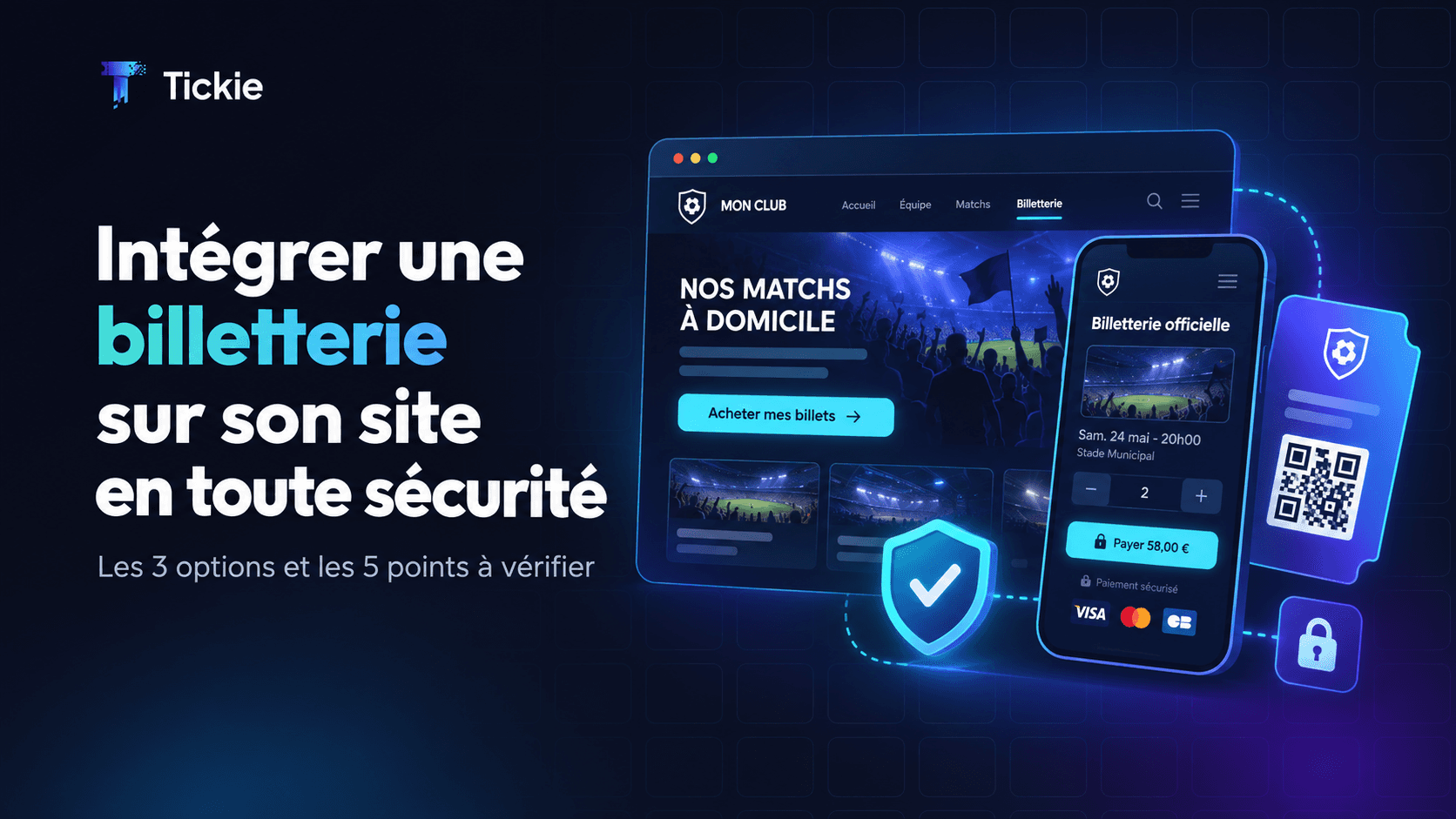
An address in the club's name, for example tickets.yourclub.com, is the first line of defense against fake sites: fans recognize it at a glance. We cover this in our article on how to safely add a ticketing platform to your website.
(Link on “our article on how to safely add a ticketing platform to your website”: /blog/integrer-billetterie-site-securite)
2. An official address repeated everywhere
Website, social media, emails, the big screen, stadium announcements: keep reminding people where to buy. A fan who knows the official address spots a suspicious site right away.
3. Digital, named tickets
A ticket tied to a name and an account is much harder to copy and resell on the sly than a simple PDF.
4. Official resale with clear rules
Maximum price, number of resales, deadline: without rules, official resale protects against fake tickets, but not against scalping.
5. A prevention message before every big fixture
A few days before a derby or a sold-out match, remind your fans to buy only on the official ticketing platform, and never to pay a stranger by bank transfer. That's when scams multiply, and a simple message can save dozens of fans from being turned away.
Ticket resale with Tickie
Fake tickets, fake sites, ghost sellers, scalping: every scam in this guide has one thing in common. They happen outside the club's ticketing platform. With Tickie, resale stops being a risk and becomes a club service: every purchase, transfer and resale happens on the official ticketing platform, where fans exchange their seats securely and the club stays in control of every ticket.
Against fake sites: the ticketing platform is set up as a white label on the club's domain. Fans have a single address to remember, in their club's colors, and can spot a copy more easily.
Against social media scams: transferring, reselling and lending seats all happen directly on the official ticketing platform. A fan who can't make it has a simple, safe option, without dealing with a stranger.
Against scalping: the club sets its own resale rules (price, number of resales, dates, eligible tickets) and can limit the number of tickets per person. Automated purchases are detected and blocked as soon as sales open.
Against fake tickets: every resold or transferred ticket gets a new code, and the old one is canceled. Payments are secured by Adyen, with 3D Secure.
Every exchange also benefits the club: when a seat is transferred or resold, the new ticket holder is identified in the CRM. The club grows its contact database and can then re-engage that person for an upcoming match.
Frequently asked questions
How do you avoid scams when buying soccer tickets?
Buy only on the club's official ticketing platform, accessible from its website. For a sold-out match, use the club's official resale if it has one. Be wary of offers on social media and of unusually low or high prices, and never pay a stranger by bank transfer or friends-and-family payment.
Can you resell a ticket for more than face value?
On a club's official resale, the club sets the rules: many choose a maximum price, often face value, to prevent scalping. For some events subsidized by the government or a local authority in France, reselling above the listed price is also prohibited.
How can you tell if a ticket is fake?
It's often impossible before the check at the entrance. A ticket bought outside the official ticketing platform may have been copied and sold several times. Only official resale guarantees that a ticket is valid.
What is ticket scalping?
Scalping means buying tickets in bulk, often with automated bots, to resell them for far more than their face value. In France, it's illegal when done on a regular basis without the organizer's authorization.
What is an official resale platform?
It's a service offered by the organizer, directly on its ticketing platform, that lets attendees resell their tickets to other attendees. The ticket is verified, the old one is canceled, and the new buyer receives a valid ticket, according to the rules set by the organizer.
Take back control of your ticket resale
Resale of your tickets isn't going away: it's part of club life. The choice that's yours is whether to leave it to social media and resellers, or to organize it yourself, with your own rules.
When the club organizes it, resale protects your fans, fills your stands and finally tells you who's sitting in your stadium. When it's left to others, it costs you seats, contacts and your fans' trust.
Want to set up official resale on your ticketing platform? Talk to the Tickie team.
Share post: